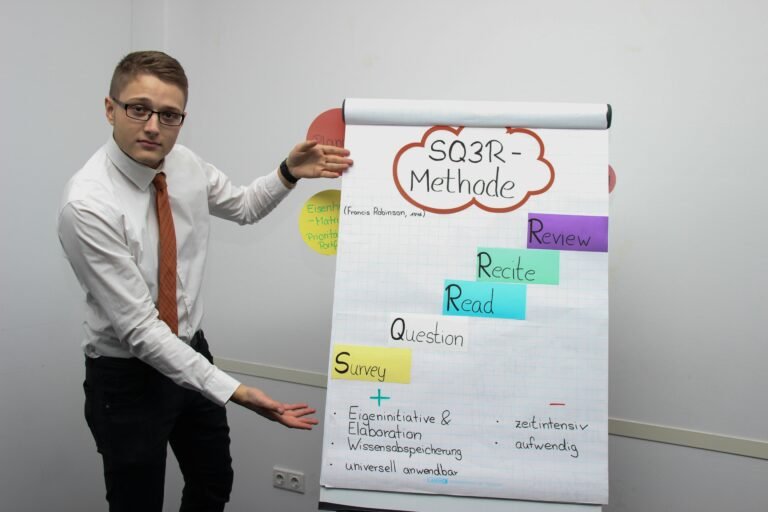

Introduction to the Cornell Note-Taking Method
The Cornell Note-Taking Method, developed in the 1950s by Walter Pauk, an educational theorist at Cornell University, is a systematic approach to note-taking that enables students to better organize their thoughts and retain information. The method is built upon the understanding that effective study techniques not only facilitate the efficient capture of notes but also promote active engagement with the material being studied.
At its core, the Cornell Note-Taking Method divides a page into three distinct sections: the cue column, the note-taking area, and the summary section. This organization allows for better clarity, enabling users to quickly identify key concepts, important details, and overarching themes in their notes. The cue column serves as a prompt for review, while the note-taking area is where the main ideas are recorded during lectures or readings. Finally, the summary section at the bottom of the page consolidates all the information into a succinct outline, reinforcing retention through active summarization.
This structured format not only aids in the organization of notes but also encourages critical thinking. As students review their notes, they can use the cues to trigger recall, fostering a deeper understanding of the content. The Cornell Note-Taking Method has been shown to improve information retention significantly when applied correctly, making it a vital tool for students and professionals alike. In an age where information is abundant, utilizing this method is an effective strategy for mastering complex subjects and enhancing overall academic performance.
Understanding the Structure of Cornell Notes
The Cornell note-taking method is a systematic way of organizing notes that enhances learning and retention. This approach is comprised of three essential components: the cue column, the note-taking area, and the summary section. Each of these elements serves a unique purpose in the note-taking process, ensuring that information is captured effectively and is easy to review.
The first component, the cue column, is a narrow left-hand column where keywords, questions, or phrases are written. Its primary purpose is to serve as a prompt for recalling the information in the corresponding notes. By focusing on this column, learners can engage in self-testing, which fosters a deeper understanding of the material. When reviewing notes, the cue column allows students to quiz themselves on the main concepts without going through the entire body of notes, thus reinforcing learning.
The note-taking area, which occupies the majority of the page, is where detailed information is recorded during lectures or reading sessions. This section is utilized for capturing the core content, insights, and explanations in a structured format. By integrating structured bullet points or detailed descriptions, the note-taking area helps clarify complex information and facilitates easier review later on. Utilizing techniques such as abbreviations and symbols can aid in enhancing efficiency while taking notes.
Lastly, the summary section is located at the bottom of the page and is used for summarizing the content from the notes. After the lecture or reading, summarizing the key points in this section reinforces learning and encourages the synthesis of information. This concise recap helps in revisiting the material without having to sift through extensive amounts of notes, making it an invaluable element of the Cornell method. In summary, the organized structure of Cornell notes promotes better retention through an effective preparation strategy, allowing students to master the material efficiently.
Benefits of Using the Cornell Note-Taking Method
The Cornell Note-Taking Method offers various advantages that enhance the educational experience for students and professionals alike. One primary benefit of this method is improved organization of notes. By dividing the page into sections for cues, notes, and summaries, learners can systematically arrange their thoughts and materials. This structure not only facilitates easy review but also allows for better connections between concepts, making it easier to recall information later.
Another significant advantage of the Cornell method is its capacity to improve understanding and retention of material. The process of summarizing information in one’s own words, as required by this method, encourages deeper engagement with the content. This active learning approach fosters critical thinking skills and enhances retention, which proves invaluable when preparing for exams or completing assignments. Additionally, incorporating review sessions, often recommended as an integral part of the Cornell technique, optimizes memory retention.
Furthermore, the Cornell Note-Taking Method aids in better preparation for exams. By using structured notes, students can create targeted review sessions that focus on key concepts and important details. The method allows for the quick identification of areas needing further attention, ultimately leading to more efficient study sessions. By narrowing down information into concise cues, learners can streamline their revision process and approach examinations with greater confidence.
Lastly, this approach increases efficiency during study sessions. The broad structure of the notes minimizes the time spent searching for information, allowing learners to utilize their time more effectively. Overall, the benefits of the Cornell Note-Taking Method make it an essential tool for those seeking an organized and effective way to manage their academic or professional learning experience.
How to Implement the Cornell Note-Taking Method
The Cornell Note-Taking Method is an effective technique for organizing notes and enhancing comprehension. To implement this method successfully during lectures, discussions, or while reading, follow these steps:
1. **Preparation**: Before the session, prepare your note paper. Divide your page into three sections: a narrow column on the left for keywords and questions, a larger column on the right for detailed notes, and a summary space at the bottom. This layout helps you structure notes and promotes effective review later.
2. **During the Lecture/Reading**: As you engage with the content, use the right-hand section to jot down important points, concepts, and any explanations provided. Aim to capture the essence of the material rather than transcribing everything verbatim. Use abbreviations and symbols to streamline your note-taking process, which facilitates quick writing and ease of understanding.
3. **Post-Lecture Reflection**: After the lecture or reading session, take a moment to review your notes. Highlight key concepts and terminology that stand out. Use the left-hand column to fill in questions that arise from your notes or to indicate important terms that should be memorized. This will aid in reinforcing learning and preparing for assessments.
4. **Summarization**: At the end of your notes, utilize the summary section to distill the main ideas and insights from the material. This not only helps consolidate your understanding but also functions as a quick reference for future study sessions. Summarizing aids recall and encourages deeper comprehension of the subject matter.
5. **Regular Review**: To maximize retention, schedule regular intervals for reviewing your Cornell notes. Engage with the questions you wrote in the left column to test your knowledge. This step reinforces learning through active recall, ensuring that the information remains ingrained in your memory.
Adapting the Cornell Method for Different Subjects
The Cornell Note-Taking Method is a versatile tool that can be customized to fit a variety of academic subjects. When adapting this method, it is essential to consider the unique requirements of each discipline, as different subjects may demand distinct approaches to note organization and content presentation.
For instance, in mathematics, where problem-solving is crucial, students should focus on jotting down equations, formulas, and problem-solving steps in the notes section. The cue column can be utilized for defining key terms and types of problems. This structured approach allows students to quickly review and practice mathematical concepts efficiently.
In science subjects, the Cornell Method can be adapted to incorporate diagrams and graphs. Students can sketch illustrations in the note-taking area while annotating important observations in the cue section. For example, when studying biology, students may diagram cell structures, highlighting essential functions and properties in the cues. This visual aspect not only aids in retention but also enhances understanding of complex information.
When it comes to literature, the Cornell Method can help students track themes, character analyses, and important quotes. In the notes section, readers can summarize chapters and analyze literary devices, while the cue column can be used for discussion points and character names. This method facilitates a deeper understanding of the material and promotes insightful discussions during class.
In history, key events, dates, and figures can be succinctly presented in the notes section, with the cue area dedicated to significant impacts and connections. Creating timelines or summarizing events can enhance the clarity of historical contexts, making it easier for students to process and recall information during exams.
Ultimately, adapting the Cornell Method for various subjects requires flexibility and creativity. By tailoring the approach to meet the demands of distinct content, students can maximize their engagement and retention, resulting in effective learning outcomes across diverse academic disciplines.
Challenges and Solutions in Using Cornell Notes
The Cornell Note-Taking Method is a powerful tool for students, yet it is not without its challenges. Many individuals encounter common obstacles when attempting to utilize this technique effectively. One of the primary challenges is time constraints. Students often find themselves pressed for time during lectures, which can lead to incomplete or rushed notes. This situation can hinder the benefits of the Cornell method, as effective note-taking requires reflection and organization, which may be compromised under time pressure.
Another common challenge is the difficulty in summarizing content during the review phase. After a lecture, students might struggle to distill information into concise summaries that accurately reflect the key points. This process is essential for reinforcing understanding and retention, and any hesitation or uncertainty can significantly reduce the effectiveness of the Cornell Notes approach.
To address the issue of time constraints, students can implement several practical solutions. One strategy involves preparing for lectures in advance by reading relevant materials. This preparation allows students to familiarize themselves with the content beforehand, making it easier to identify key points and write more meaningful notes during the lecture itself. Another approach is to focus on capturing major ideas instead of attempting to transcribe everything verbatim. By prioritizing the central concepts, students can save time while still utilizing the Cornell system effectively.
To tackle the summarization challenge, students can practice their summarization skills outside of lectures. Engaging with study groups or utilizing peer reviews can provide opportunities for collaborative learning and feedback, helping to refine the ability to distill information. Additionally, incorporating visual aids, such as mind maps or flashcards, can enhance the summarization process. By employing these strategies, students can overcome the typical hurdles associated with the Cornell Note-Taking Method and improve their overall learning experience.
Combining the Cornell Method with Other Study Techniques
The Cornell Note-Taking Method is a powerful tool on its own but can be further enhanced when integrated with various other study techniques. For example, active recall, a widely recognized learning strategy, emphasizes the importance of retrieving information from memory rather than passively reviewing notes. By employing the Cornell Method, students can formulate questions in the cue column that prompt active recall during their study sessions. This ensures that learners are not just revisiting their notes but engaging with the material actively, which can significantly improve retention.
Another effective approach is the application of spaced repetition alongside the Cornell Method. Spaced repetition involves revisiting the material at increasing intervals, which has been shown to bolster long-term retention. By utilizing the summary section of the Cornell notes, students can identify key concepts that require revisiting. Scheduling these revisions within their study plan can lead to more effective learning outcomes. Integrating both techniques allows students to benefit from the structured note-taking of the Cornell Method while employing the timing principles of spaced repetition.
Mind mapping is yet another complementary technique that works well with the Cornell Method. While the Cornell system focuses on text-based note-taking, mind mapping encourages visual learning through the creation of diagrams that represent relationships between concepts. After summarizing lessons using the Cornell Method, students can convert their notes into a mind map. This visual representation facilitates a different cognitive approach to the same material, making connections clearer and enhancing understanding.
Overall, combining the Cornell Note-Taking Method with these supplementary strategies can lead to a more holistic learning experience. By diversifying study techniques, students can adapt their studying to fit their unique learning styles and achieve greater mastery of the subject matter.
Real-Life Success Stories
The Cornell Note-Taking Method has garnered widespread recognition, with numerous students and professionals reporting significant benefits from its implementation in their studies and work routines. One of the most remarkable testimonials comes from Sarah, a graduate student pursuing a Master’s degree in Psychology. She shares, “Using the Cornell Method has transformed how I organize my notes. Before, I struggled with keeping track of my lectures, often missing key concepts. Now, I can summarize notes effectively and review them quickly, which has improved my retention of information significantly.”
Another success story is that of Mark, a software engineer who began using the Cornell Note-Taking Method during a critical training session at his tech firm. He explains, “I discovered that taking structured notes using the Cornell format allowed me to capture complex technical concepts in a simplified manner. The method not only helped me understand better during the training but also provided me with an effective way to prepare for upcoming projects. I can quickly refer back to my notes and feel more confident in my ability to contribute to my team’s success.”
Moreover, high school English teacher, Ms. Thompson, has integrated this method into her classroom environment. She states, “I introduced the Cornell Note-Taking Method to my students as a way to enhance their study habits. The structured layout has made it easier for them to organize their thoughts and encourages active engagement during lessons. My students report that they feel more prepared for exams and have a clearer understanding of the literature we explore in class.”
These real-life stories highlight the practical applications of the Cornell Note-Taking Method and underscore its versatility in various educational and professional settings. The method empowers individuals to approach their learning and work with enhanced organization and retention of crucial information, leading to tangible success.
Conclusion and Final Thoughts
The Cornell Note-Taking Method is a powerful and structured approach to note-taking that effectively enhances comprehension and retention of information. Throughout this guide, we have explored the fundamental components of the Cornell system, which include the preparation of the note-taking layout, the process of active listening, and the art of summarizing and reflecting upon the notes taken. By breaking down the note-taking process into manageable sections, this method not only organizes content effectively but also encourages a deeper engagement with the material.
One of the significant advantages of the Cornell Note-Taking Method is its versatility; it can be applied across various subjects and learning environments. The simplicity of its structure allows for easy implementation, regardless of whether one is in a lecture, reading a textbook, or conducting any other forms of information gathering. This adaptability makes it an invaluable tool for students, professionals, and lifelong learners alike.
Moreover, the integration of concepts from the ‘Recall’ section reinforces knowledge retention, ultimately leading to improved academic performance and a better grasp of complex subjects. As note-takers practice this method, they begin to appreciate the value of organization, which translates into a more efficient study routine.
We encourage readers to implement the Cornell Note-Taking Method in their study practices. As one becomes more familiar with this technique, it may profoundly influence the method of studying and approach to information retention. The benefits of this structured note-taking technique can undoubtedly lead to enhanced learning experiences and outcomes. Embrace the Cornell method and discover its transformative impact on your academic journey.